
Pickleball is an exciting and accessible sport that combines elements of tennis, badminton, and ping pong, making it perfect for players of all ages and skill levels. In this guide, you’ll discover everything you need to know about getting started with indoor pickleball in Brampton, from finding local facilities to understanding the basic rules and equipment. Whether you’re a complete beginner or just looking to improve your game, this guide will help you navigate your way to enjoying this engaging sport in Brampton’s vibrant indoor courts.
Types of Indoor Pickleball
Indoor pickleball encompasses various styles tailored for different preferences and skill levels. Understanding these types helps you find your fit in the game.
- Recreational Play
- Competitive Leagues
- Drop-in Sessions
- Skill Development Clinics
- Mixed Doubles and Singles
Assume that you’ll explore different options to enhance your indoor pickleball experience and grow as a player.
| Type | Description |
|---|---|
| Recreational Play | Casual games with friends or family focusing on fun. |
| Competitive Leagues | Organized teams and tournaments for serious players. |
| Drop-in Sessions | Open play sessions at specific times without prior arrangement. |
| Skill Development Clinics | Focused instruction to improve specific aspects of your play. |
| Mixed Doubles and Singles | Playing formats involving various player combinations. |
Equipment Needed
You’ll need specific equipment to enjoy indoor pickleball effectively. A paddle, ball, and appropriate footwear are necessary. Using a paddle that feels comfortable in your hand can enhance your control and responsiveness. Lightweight indoor shoes with good grip prevent slipping and allow agile movements on the court.
Court Specifications
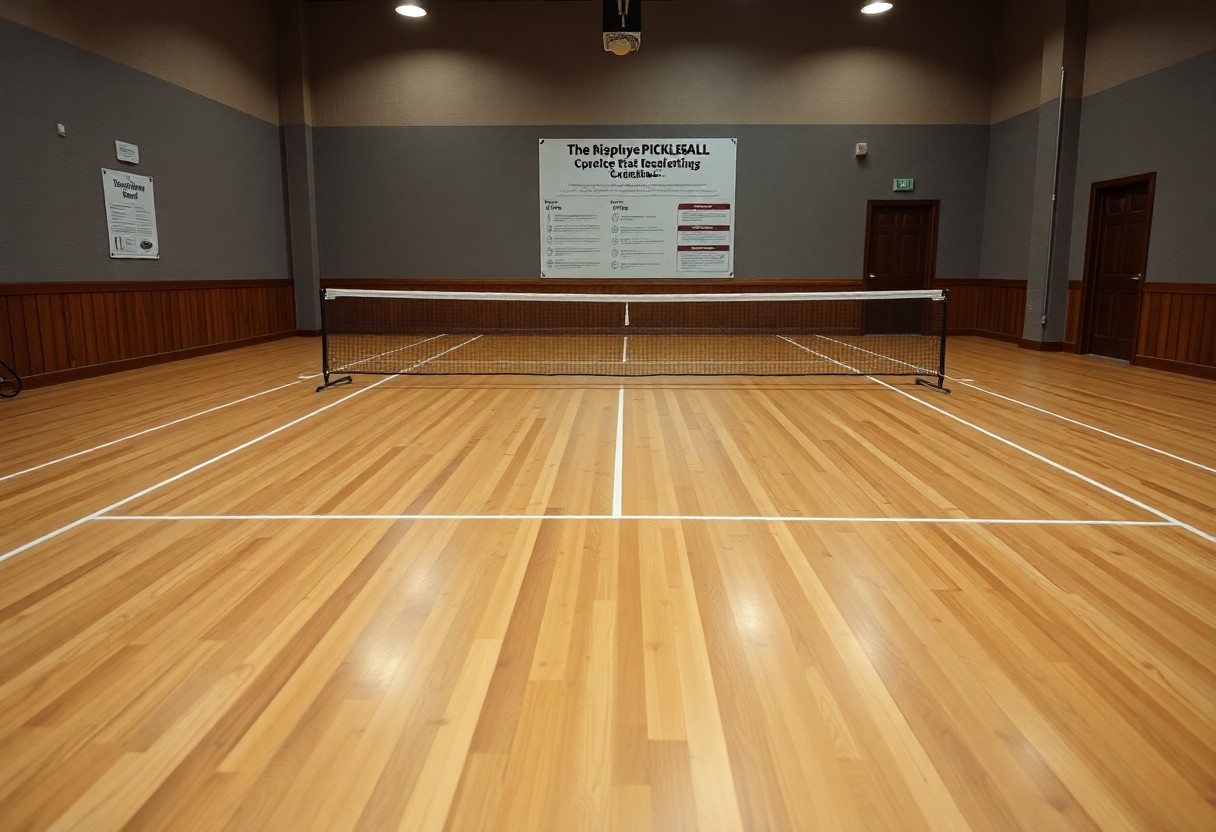
Indoor pickleball courts generally follow specific dimensions to ensure a consistent playing experience. The standard court size is 20 feet wide by 44 feet long for both singles and doubles play. Courts are often marked with specific lines for serving and scoring zones, which are crucial for gameplay dynamics.
Indoor courts usually incorporate a non-slip surface, providing adequate traction and minimizing the risk of injuries. Proper lighting and ventilation contribute to a comfortable atmosphere for players. Facilities often have adjustable nets, allowing you to practice at varying heights. The designated areas outside the court lines help players maintain spatial awareness during play, improving strategy execution in real-time scenarios. Whether you’re playing recreationally or competitively, understanding court specifications enhances your overall experience.
Tips for Beginners
Starting your indoor pickleball journey can be daunting, but with these tips, you’ll find it easier to adapt and enjoy the game. Focus on developing your hand-eye coordination and practice your serves regularly. Always keep your knees slightly bent and maintain a good grip on your paddle for better control. Consider playing with more experienced players to learn new strategies and techniques quickly.
- Practice regularly to build confidence.
- Watch online tutorials for techniques.
- Engage with fellow players for advice.
- Stay aware of your positioning on the court.
- Have fun and enjoy the social aspect.
Thou will improve rapidly with dedication and consistent play.
Basic Rules of the Game
Indoor pickleball features a few crucial rules to ensure a fair and enjoyable game. Points are scored only by the serving team, and a game is typically played to 11 or 15 points, winning by at least two. The serve must be hit underhand from behind the baseline and land in the diagonal service box. Players must avoid the non-volley zone, also known as the kitchen, when hitting a ball in the air.
Strategies for Success
Adopting effective strategies can significantly enhance your performance on the court. Aim for consistent communication with your partner, maximizing teamwork and coverage during rallies. Utilize a mix of offensive and defensive shots, incorporating drop shots and volleys to keep your opponents guessing. Control the pace of the game by varying your shot placement and aiming for open spaces on the court.
The balance between offense and defense is vital. Offensive shots, such as powerful drives and angle shots, can pressure your opponents, while defensive tactics like lobbing and positioning can help you regain control. Familiarize yourself with your opponents’ weaknesses and tailor your strategies accordingly. As you become more skilled, adapting your game plan based on real-time observations will prove invaluable. Always analyze past performances to pinpoint areas for improvement. Consistent practice and strategy adjustment will lead to lasting success in indoor pickleball.
Step-by-Step Guide to Playing
| Step | Description |
| 1 | Find a playable indoor court, ensuring it’s equipped for pickleball. |
| 2 | Gather necessary equipment: paddles, balls, and appropriate attire. |
| 3 | Warm up and stretch to prevent injuries and enhance performance. |
| 4 | Familiarize yourself with the court layout and rules before starting. |
| 5 | Begin play, focusing on communication and strategy with your partner. |
Starting a Game
To start a game, players should first decide on serving order through a coin toss. The winning team serves first, with the server standing behind the baseline. You aim to hit the ball diagonally into the opponent’s service area, ensuring it clears the non-volley zone. As the ball is in play, quick reactions and footwork are vital, so position yourself effectively to return the serve.
Scoring and Winning
Scoring in pickleball follows a rally scoring system, meaning any team can earn points regardless of who served. You score a point when the opposing team fails to return the ball, and games are typically played to 11 points, winning by at least 2. Winning the match occurs when you secure two sets of 11 points.
While a typical game concludes at 11 points, some tournaments might play to 15 or even 21, adjusting rules for scoring based on the event format. Staying aware of the score is critical, as it dictates your strategy. Focus on making precise shots and controlling the pace of the game to maximize your chances of winning points consistently.
Factors to Consider
Several factors can enhance your indoor pickleball experience in Brampton. Understanding these elements will help you find the perfect setting and schedule that suits your needs. Key considerations include:
- Venue quality and facilities available
- Cost of play and membership options
- Player skill level and community engagement
- Accessibility and travel times
The right environment can significantly affect your enjoyment and skill improvement.
Choosing the Right Venue
Select a venue that offers well-maintained courts and ample space for multiple games. Look for facilities that provide access to guidelines, equipment rentals, and quality playing surfaces. Engaging with your local pickleball community will help you find the ideal spot that aligns with your skill level and social preferences.
Scheduling Playtime
Finding the right time to play indoor pickleball can significantly influence your overall experience. Peak hours might attract larger crowds, impacting your ability to practice and compete effectively. Aim for early mornings or late evenings during weekdays, as these times often have lower attendance. Weekend sessions can also be popular; however, planning ahead will ensure you secure court time efficiently.
Pros and Cons of Indoor Pickleball
| Pros | Cons |
|---|---|
| Weatherproof play all year round | Limited court availability during peak times |
| Consistent playing conditions | Indoor venues may have membership fees |
| Controlled environment enhances focus | Space constraints can affect gameplay |
| Access to amenities like showers | Less natural light can impact visibility |
| Socialized environment encourages community | Potential for higher noise levels |
| Opportunities for organized leagues | Varied court surfaces may require adjustment |
| Can play regardless of outdoor conditions | Travel time to facility can be inconvenient |
| Suitable for all skill levels | Equipment might need to be adjusted for indoor play |
| Access to coaching and lessons | Less freedom in game style due to space |
| Improved indoor skills translate to outdoor play | Potential for increased competition stress |
Advantages of Indoor Play
Playing pickleball indoors offers numerous benefits enhancing both your experience and skill development. You can enjoy consistent weather conditions, eliminating cancellations due to rain or cold. Controlled environments ensure that distractions are minimal, helping you focus solely on your game. Many indoor facilities offer amenities like showers and social areas, fostering community and providing opportunities for organized leagues and tournaments that cater to all skill levels.
Disadvantages to Consider
While indoor pickleball has many advantages, several drawbacks warrant your consideration. Court availability can be a significant issue, particularly during peak hours when demand is high, potentially leading to long wait times. Many indoor facilities charge membership or court fees, which can add up over time. Additionally, the playing surface may differ from outdoor courts, requiring you to adapt your strategies and techniques for optimal performance.
Traveling to an indoor facility can also be a downside, especially if it’s located far from your home. The indoor environment might offer less natural light, which can impact visibility during fast-paced games. Some players might find the noise levels distracting, particularly in busy venues where multiple games are underway. Adapting to the restricted space may affect your gameplay style, making it vital to practice regularly in that setting for best results.
Common Mistakes to Avoid
Focusing on the game’s basic techniques can prevent you from making common mistakes that new players often encounter. Awareness of these pitfalls enhances your enjoyment and success on the court. Keep an eye on your position, communication, and preparation to ensure a smoother playing experience.
Overlooking Etiquette
Ignoring proper etiquette can lead to conflict with other players. Be mindful of your behavior, including maintaining a positive attitude, respecting court time limits, and acknowledging your opponents’ skill. Small gestures, like offering encouragement or providing space for others to play, foster a friendly atmosphere.
Neglecting Practice
Consistent practice is key to improving your pickleball skills. Spending time honing your serve, volleying, and court positioning boosts confidence and enhances gameplay. Scheduled practice sessions, ideally two to three times a week, allow you to explore different techniques and strategies, which ultimately leads to better performance in matches.
Without dedicated practice, your progress may stagnate, leading to frustration and discouragement. Aim to find a partner for drills or join a local club for organized practice times. Set specific goals for each session, focusing on areas like footwork or shot accuracy, to maximize your improvement. Balancing enjoyment with skill development means you can enjoy playing while becoming a more competent competitor.
To wrap up
Ultimately, you have now equipped yourself with vital knowledge and tips for playing indoor pickleball in Brampton. By understanding the rules, choosing the right equipment, and knowing where to play, you can quickly embrace this fast-growing sport. Engage with local communities and practice regularly to enhance your skills. With dedication and enthusiasm, you’ll enjoy a rewarding experience on the court, staying active while having fun. Dive in and make the most of your pickleball journey!
