
Over a few sessions at Brampton’s top sports centres, you’ll quickly master the basic rules, grips, and footwork; learn how to choose a paddle, indoor shoes, and appropriate attire; set your practice routine and navigate court bookings, league or clinic options; and connect with local players and instructors to accelerate your progress.
Understanding Indoor Pickleball
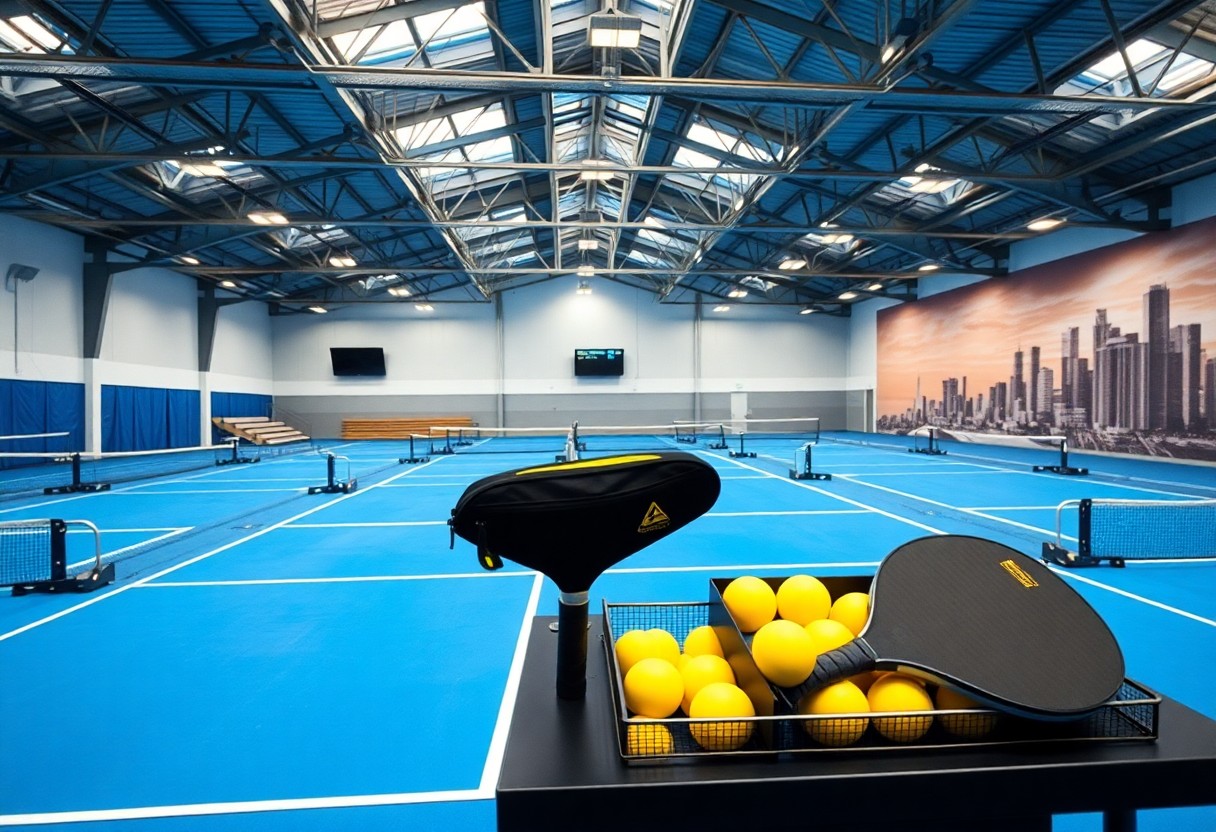
Indoor play uses a 20×44 ft court with a net 36 inches at the sidelines and 34 inches at the center, and a 7-foot non‑volley zone on each side; you’ll notice faster rallies on gym wood or sport tile than on outdoor asphalt. Adjust your timing for lower ceilings and brighter, consistent lighting at Brampton’s centres, and pick balls and paddles that dampen speed so you can control dinks and drives in tighter indoor spaces.
Key Rules and Regulations
You must serve underhand with paddle contact below your waist and the serve must land diagonally beyond the 7‑ft non‑volley zone; the two‑bounce rule requires the serve and the return each bounce once before volleys. Typical scoring is to 11 points, win by two, with traditional side‑out scoring where only the serving side earns points; tournaments sometimes use rally scoring to 15 or 21 depending on format.
Equipment Essentials
You’ll want an indoor‑rated ball (softer, designed for reduced speed), a paddle in the 7.0-8.5 oz range for a balance of control and power, a grip size around 4-4¼ inches to limit wrist strain, and non‑marking court shoes with strong lateral support; Brampton centres usually provide nets and court lines, but bringing your own paddle and shoes improves performance immediately.
When choosing a paddle, prioritize material and weight: graphite or carbon‑fiber faces offer quick response and touch for net play, while composite cores can add power for drives-test paddles if possible, since a 0.5 oz difference noticeably changes feel. For balls, use indoor models that reduce wind sensitivity and provide a predictable bounce on gym floors. Finally, your shoe sole pattern should match indoor courts to avoid slipping and to protect facility surfaces during long sessions.
Choosing the Right Sports Centre
Factors to Consider
When comparing centres you should assess court quality, peak-hour availability and coaching so your game improves quickly; aim for venues with at least 4 indoor courts, 24-30 ft ceiling clearance, and low‑abrasion polyurethane or maple flooring. Also check booking systems, evening hours, drop‑in fees ($5-15) versus memberships ($30-60/month), and transit or parking convenience. This checklist helps you compare centres:
- Court count (4+ recommended for busy evenings)
- Ceiling height (min 24 ft) and clear lighting (≈500 lux)
- Floor surface (non‑slip PU or maple) and proper court markings
- Booking flexibility and online reservation system
- Coaching, clinics, and beginner programs
- Fees: drop‑in, hourly court rental ($20-40/hr), membership options
- Parking, transit access, and ventilation
Top Facilities in Brampton
When you scout Brampton facilities, target centres that operate 4-8 indoor courts, run structured beginner clinics and host open-play sessions evenings and weekends; many venues run monthly 16-32 player tournaments and ladder leagues that attract 80-150 weekly participants, so you should expect peak-times to book out 7-10 days ahead.
Compare amenities: you want on-site coaching (certified instructors or club pros), racquet and ball rentals, pro shop access, and clear booking windows. Typical court rental runs $20-40/hour, beginner clinics $15-25/session, and memberships often save money if you play 2+ times weekly; use these metrics to pick the best fit for your schedule and budget.
Getting Started with Lessons
When you book lessons at Brampton’s indoor centres, choose private (30 or 60 minutes), semi-private (2-4 players) or clinics (6-12 players) to match your goals; private 60-minute sessions commonly range $40-$70 and group clinics $15-30 per person. Schedule 1-2 lessons weekly and use starter packages (3-5 sessions) to lock in times. Ask about demo paddles, court times, and sight-lines for learning positions so you get efficient practice from day one.
Finding Qualified Instructors
You should prioritize coaches with certifications such as the Professional Pickleball Registry (PPR) or training through Pickleball Canada, plus at least 2 years teaching experience; check for references, sample drills, and video of in-class coaching. Request a short trial lesson to assess communication and drill structure, confirm any background checks for youth sessions, and ensure the instructor tracks measurable progress like serve accuracy percentages or drill completion rates.
Tips for Beginners
Start with a mid-weight paddle (about 7.5-8.5 oz) and a grip near 4 1/8″ so you avoid wrist strain, and wear non-marking indoor court shoes for lateral support; warm up 8-12 minutes focusing on dinks and volleys, then practice serve consistency for 15 minutes. Aim for two practice sessions per week and target small goals-hit your first reliable third-shot drop within 6-8 weeks to accelerate match play confidence.
- Bring a notebook to log drills, scores, and paddle settings.
- Book 30-60 minute private lessons to work one-on-one on technique.
- This helps you turn practice habits into reliable match skills.
Drill smart: spend 10 minutes on partner dinking (alternating cross-court), 15 minutes on serve placement (50 focused serves aiming for the T or body), and 15 minutes on third-shot drop repetition until you hit it 3 out of 5 times. You can record 1-minute clips of your serve and third-shot weekly to track improvement; use measurable targets-like 70% dink consistency over 100 balls-to gauge progress and adjust practice intensity.
- Practice the partner dinking drill 3 times per session for 10 minutes each.
- Log measurable targets such as 50 serves with 60% landing in the service box.
- This creates objective benchmarks so you can measure real improvement.
Joining a Pickleball Community
You can expand your play beyond open courts by joining leagues, ladders, or weekly socials at Brampton’s Finest Sports Centres. Many locations run 8-12 week leagues, drop-in sessions (6-10 players per court), and beginner clinics that meet twice weekly. By signing up you get scheduled play, coaching options, and priority booking for courts during peak hours like 6-9 pm, helping you build consistency and measurable progress.
Benefits of Local Groups
Joining local groups accelerates skill development and expands your network; for example, Tuesday socials at Brampton South attract 20-30 players across skill levels. You’ll gain consistent practice partners, access to shared equipment or discounted paddle demos, and match experience through round-robin formats. Plus groups often offer coaching nights and intra-club tournaments that give you game pressure and feedback you won’t get from casual pickup play.
How to Connect with Other Players
Use the centre’s bulletin boards, Facebook groups, Meetup pages, and the facility’s booking portal to find partners and events; many groups post weekly drop-in schedules and court sign-up sheets. You should also join ladders or sign up for weekend socials (Saturday morning and Sunday afternoon draws often have 16-40 players), then follow the group threads to claim a spot and coordinate warm-ups.
When you reach out, write concise posts like “New to ladder, 3.0 level, seeking doubles partners Tuesday 7pm,” and arrive 10-15 minutes early to warm up and meet partners. Offer to rotate courts, bring 2-3 balls, and note your preferred drills or weaknesses so hosts can match you appropriately. Tracking results from weekly matches helps you communicate progress and secure better pairings over 4-8 weeks.
Improving Your Game
Practice Techniques
Slice your practice into focused 10-30 minute blocks: 10 minutes dynamic warm-up, 15 minutes footwork ladder drills, then a 30-minute drill set. You should hit 150-200 serves per week and run 3×10-minute dinking drills to build consistency. Use a ball machine or partner for 50-rep third-shot drop sets and record one session weekly on your phone to analyze swing path and positioning.
Essential Skills to Develop
Prioritize a dependable serve (aim for 60-70% first-serve-in during practice), a third-shot drop you can land 7 out of 10 times, and dinking that sustains 10+ rallies. You also need quick lateral recovery-target 1.2-1.5 seconds between direction changes-and volley placement that targets opponents’ feet or sidelines to force errors.
For depth, run drills: 50 target serves per session using cones at the T and body line, 3×10 third-shot drops from midcourt to the kitchen, and 12-minute ladder sessions twice weekly. A club player who improved third-shot drop success from 3/10 to 7/10 over eight weeks raised match wins from 40% to 65%, showing how focused repetition translates into results for your game.
Staying Updated on Events
Stay current by checking facility calendars, subscribing to email lists, and following social pages; many Brampton centres post weekly schedules and monthly tournament brackets, so you’ll know about Wednesday drop-ins, Saturday beginner clinics, and seasonal 32-player events before they fill up.
Local Tournaments and Competitions
Sign up for monthly tournaments – often 16-32 player brackets with skill-based divisions (2.5-4.0) – where you’ll track match times, results, and registration deadlines on facility boards or Eventbrite pages; competitive leagues run Spring and Fall, while junior showcases for ages 12-17 occur on long weekends.
Networking Opportunities
You’ll find networking at post-tournament socials, weekly mixers, and pro-shop bulletin boards that list partner searches; coaches host partner-matching nights attracting 20-40 players, and Facebook groups often organize carpooling, practice partners, and skill-swapping sessions.
To build a reliable network, attend at least two mixers or drop-ins per month; within 4-6 weeks you’ll meet 8-12 consistent partners and potential coaches. Use WhatsApp or Facebook threads to schedule 3-4 weekly practices, swap drills, and coordinate doubles pairings, and volunteer at tournaments (typically 5-10 volunteers) to gain insider scheduling tips and priority sign-ups.
Summing up
Ultimately you can start playing indoor pickleball at Brampton’s finest sports centres by booking a court or clinic online, bringing or renting your paddle and proper shoes, attending a beginner session to learn rules and court positioning, using staff-led drills to build consistency, joining drop-in play to gain match experience, and following facility etiquette to keep play safe and enjoyable.
