
You should evaluate your students’ age and skill levels, local facility quality, coaching philosophy, and scheduling flexibility to match community needs in Brampton. Assess program goals, safety and insurance requirements, cost structure, and opportunities for progression and parental engagement. This guide will help you make informed choices that boost participation, deliver measurable development, and align with local regulations and community expectations.
Understanding Your Teaching Goals
Define Your Objectives
Start by specifying outcomes: are you building basic motor skills for ages 6-9, developing tactical IQ for U13-U15, or preparing athletes for competitive city leagues? Set measurable targets like class sizes of 8-12, two to four sessions weekly, and retention goals (e.g., 70% season-to-season). Use examples such as increasing successful passing rates by 20% over eight weeks or moving 30% of beginners into intermediate classes within a season.
Assess Your Expertise
Catalog your certifications (NCCP Level 1 or 2, Hockey Canada, Canada Basketball modules), years coaching, and concrete outcomes-athletes progressed to city teams, 80% attendance, or measurable skill gains. If you have 3+ years plus a Level 2 accreditation, you can reasonably run a competitive U13 program; if not, plan to partner with a certified coach or pursue targeted courses.
Perform a gap analysis: run a 4-8 week pilot, use simple pre/post tests (timed sprints, passing accuracy, small-sided game stats) and collect parent feedback. Track metrics weekly-attendance, skill scores, and game performance-and aim for actionable thresholds (for example, a 15-30% improvement in a targeted drill). Then adjust curriculum, coach-to-player ratio, or certification plans based on that evidence.
Analyzing Local Sports Programs
You should map local offerings-city recreation, private clubs, school teams, and grassroots leagues-to spot gaps and overlaps; in Brampton youth programs commonly serve ages 4-18, season fees often range $120-$450, and sessions run 1-3 times weekly, so prioritize options matching your target age, schedule, coach credentials, and your development goals.
Research Available Options
You can audit offerings by checking City of Brampton rec listings, club sites, and community boards; record age brackets (U6-U18), focus (fun, development, elite), session cadence, cost, and coach certifications; aim to log five programs with contact, schedule, fees, and coach-to-player ratios for direct comparison.
Available Options Breakdown
| City Recreation | Lower fees ($50-$200), seasonal, emphasis on participation, usually led by trained rec staff |
| Private Club | Higher costs ($200-$600), focused development or elite pathways, more frequent practices and select teams |
| School Teams | Free/low cost, seasonal competition, variable coaching quality, good for exposure to games |
| Community Leagues | Volunteer-run, flexible schedules, strong local ties, ideal for introductory play |
Compare Program Structures
Evaluate structures by session length (45-90 minutes), weekly frequency (1-4 sessions), coach-to-player ratio (1:6-1:12), season length (8-16 weeks), and competition load (local scrimmages vs travel tournaments); weigh how each element affects skill acquisition, retention, and family logistics.
Structure Elements Comparison
| Session Length | 45-90 minutes-short sessions for young kids, longer for tactical work |
| Frequency | 1-4 sessions/week-development often needs 2+ weekly touchpoints |
| Coach Ratio | 1:6 ideal for skills work; 1:12 acceptable for drills/scrimmages |
| Season & Competition | 8-16 week seasons; elite programs add 8-12 tournaments annually |
For example, a development-focused Brampton program might run a 10-week season with two 60-minute technical sessions plus one small-sided weekend match, typical fees $200-$300, and a 1:6 ratio; by contrast, a competitive travel club often schedules three 90-minute sessions weekly, 8-10 tournaments per year, and higher costs, so you should match structure to athlete goals and family capacity.
Evaluating Participant Needs
You should collect intake data on age, availability, prior experience, injury history and goals using a 6-10 question form; analyze responses to set session length, coach-to-player ratio and equipment needs. For example, if 60% of respondents prefer after-school slots and 40% report club experience, you’ll plan weekday evening sessions split into beginner and advanced cohorts of 8-12 players.
Identify Target Age Groups
Segment participants into practical brackets-4-6, 7-9, 10-12, 13-15 and 16-18-so you can match attention span, motor skills and rule complexity. For instance, schedule 30-40 minute sessions for 4-6 year olds, 45-60 minutes for 7-12, and 60-90 minutes with strength and tactics for teens; adjust equipment sizes and field markings accordingly.
Consider Skill Levels
Classify players as beginner, intermediate or advanced using a 10-15 minute skills assessment (dribble, pass, shoot or sport-specific tests) plus self-reported history. Then group 6-10 for focused drills, assign differentiated progressions, and use a 1-5 rubric so you can track baseline ability and tailor coaching intensity to each cohort.
Use 12-week progress cycles with re-evaluations every four weeks and measurable KPIs like 20m sprint time, cone-dribble time or 10-shot accuracy, aiming for 15-30% improvement on those drills. Set promotion criteria-such as scoring ≥4 on the rubric or achieving ≥70% drill accuracy-so you can move players objectively between groups and sustain development.
Budget Considerations
Plan for fixed and variable costs when structuring programs: facility rental often runs $30-$80/hr in Brampton, coach pay may be $15-$40/hr, equipment per season $20-$200, and insurance or permits can add $200-$1,000 annually. You should model enrollment at 50%, 75%, and 100% with a 10-15% contingency to identify break-even pricing and margin for growth.
Assess Participation Costs
Break down direct and indirect expenses so you can set equitable fees: registration, kit/uniforms ($25-$80), league or referee fees, travel per game ($10-$50), and administrative overhead. You should survey 20-30 families to measure willingness-to-pay, then pilot a tiered fee structure (full, reduced, subsidized) that aims to cover at least 85% of fixed costs while keeping access affordable.
Explore Funding Opportunities
Tap municipal grants, community foundations, and corporate sponsors to reduce participant fees: local community grants often award $2,000-$10,000, while businesses may provide $500-$5,000 in cash or in-kind support (uniforms, equipment). You can also run small fundraisers, apply for sport-specific grants, or add a voluntary surcharge at registration to fund scholarships and equipment replacement.
Write concise grant budgets and outcome statements, include letters of support from schools or recreation centres, and be prepared for typical review timelines of 6-12 weeks. You should pursue in-kind matches (facility hours, volunteer coaches) to meet funder requirements, approach 5-10 local businesses with tiered sponsorship packages, and track metrics-attendance, retention, skill gains-to strengthen future applications.
Coaching Philosophy and Style
Your coaching philosophy shapes session structure, feedback, and outcomes; if you prioritize long-term athlete development, plan 60-70% of practice for skill acquisition, whereas a performance focus shifts time to tactical drills and competitive scenarios. You can choose between developmental, performance-driven, or player-led models, and each requires different KPIs, season plans, and coach-to-player ratios-clubs in Brampton with 50%+ multi-year retention often demonstrate strong alignment between stated philosophy and on-field programming.
Align Program with Your Coaching Approach
Match program format to your style: for ages 6-9 use 45-minute sessions and a 1:8 coach-to-player ratio; ages 10-14 benefit from 60-75 minutes and 1:10, while older athletes accept 75-90 minutes and 1:12. You should set session frequency (2-4×/week for skill progression), embed measurable progressions (weekly skill targets, monthly evaluation), and confirm the program’s competitive calendar supports your periodization plan.
Evaluate Program Values and Goals
Scan mission statements, codes of conduct, and season KPIs-retention rate, progression percentages, and injury incidence-before committing. You should compare metrics: retention above 70% suggests a positive learning environment, while a win-rate over 60% often signals competitive priority; ask whether the program measures multi-year athlete development or prioritizes short-term results.
Request concrete data: annual retention %, average years per athlete, percentage advancing to higher-level squads, coach turnover, and sample season plans or athlete assessment reports. For example, a program where 25% of U14 players move into U16 competitive squads within two seasons demonstrates a defined development pathway; also ask about injury incidents per 1,000 athlete-hours and how they manage load and recovery.
Training and Resources
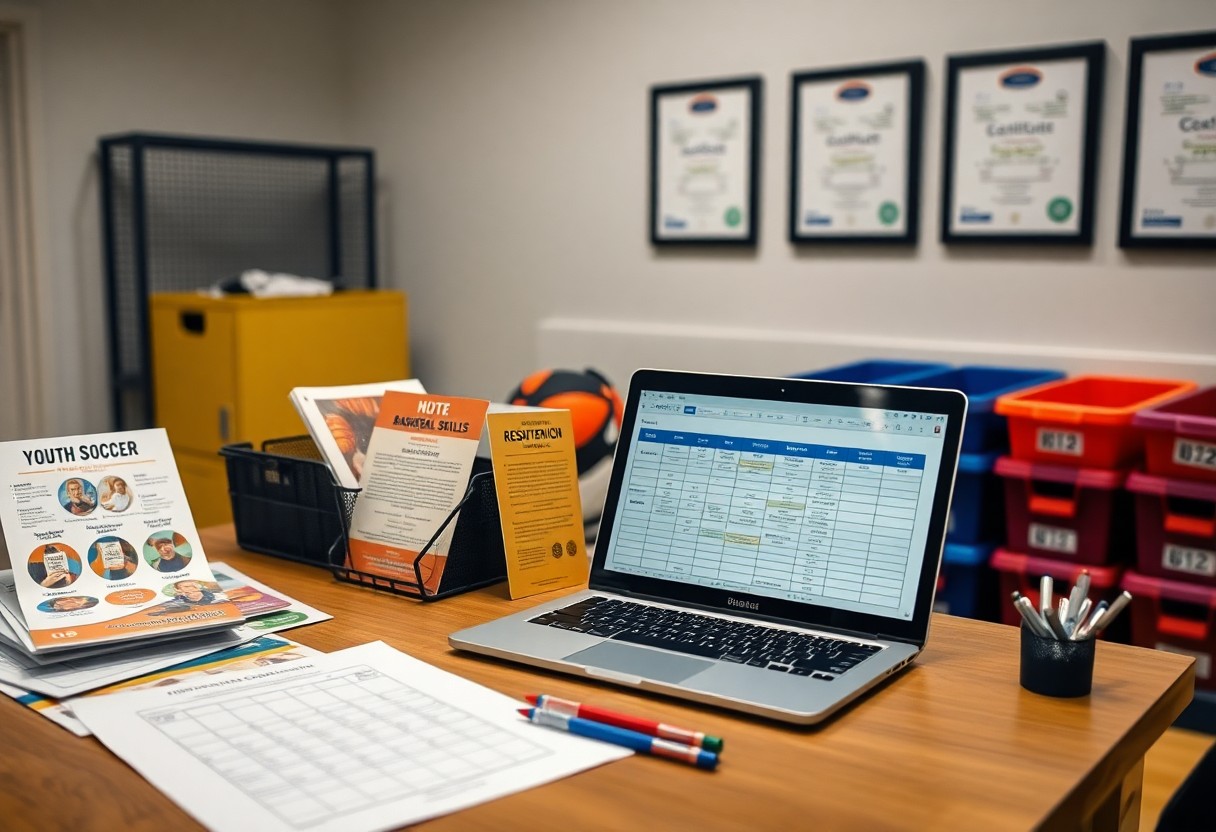
Plan training and resource needs to align with your session goals: secure required certifications (NCCP community modules, CPR and 16-hour Standard First Aid, vulnerable sector check), schedule 1-2 professional development workshops per season, inventory equipment and budget for facility time, and book peak-season slots 4-8 weeks ahead; combining these steps will reduce last-minute cancellations and keep your program consistent for participants aged 6-17.
Assess Training Requirements
Match certification, staffing and ratios to the group you teach: aim for 1:8-10 for ages 6-9 and 1:10-14 for older youth, increase support for contact sports or athletes with special needs, and plan roughly 8-20 hours of NCCP e-learning plus in-person practice for a new coach; include 16 hours for Standard First Aid, routine CPR refreshers, and a vulnerable sector check per Ontario guidelines.
Explore Available Resources
Survey municipal, school and club assets: City of Brampton recreation centres, Peel District School Board gyms and local clubs can supply space and equipment; look for funding sources such as Canadian Tire Jumpstart or provincial sport grants, and use Coaching Association of Canada eLearning to access standardized session plans and drills tailored to age and skill.
Contact facility booking offices to verify hourly rates and blackout dates, request an equipment inventory to avoid duplicate purchases, and negotiate shared-use agreements with clubs to reduce costs; recruit volunteers or work-study students from local post-secondary sport programs for assistant coaching, and apply for small equipment grants or sponsorships to cover items like portable goals, cones and training vests.
To wrap up
To wrap up, when choosing a sports program in Brampton you should weigh participant needs, your coaching strengths, facility quality, safety and certification standards, scheduling and budgets. Prioritize clear goals, measurable progress, and community fit so your program delivers sustainable development, engagement and positive outcomes for athletes and families.
